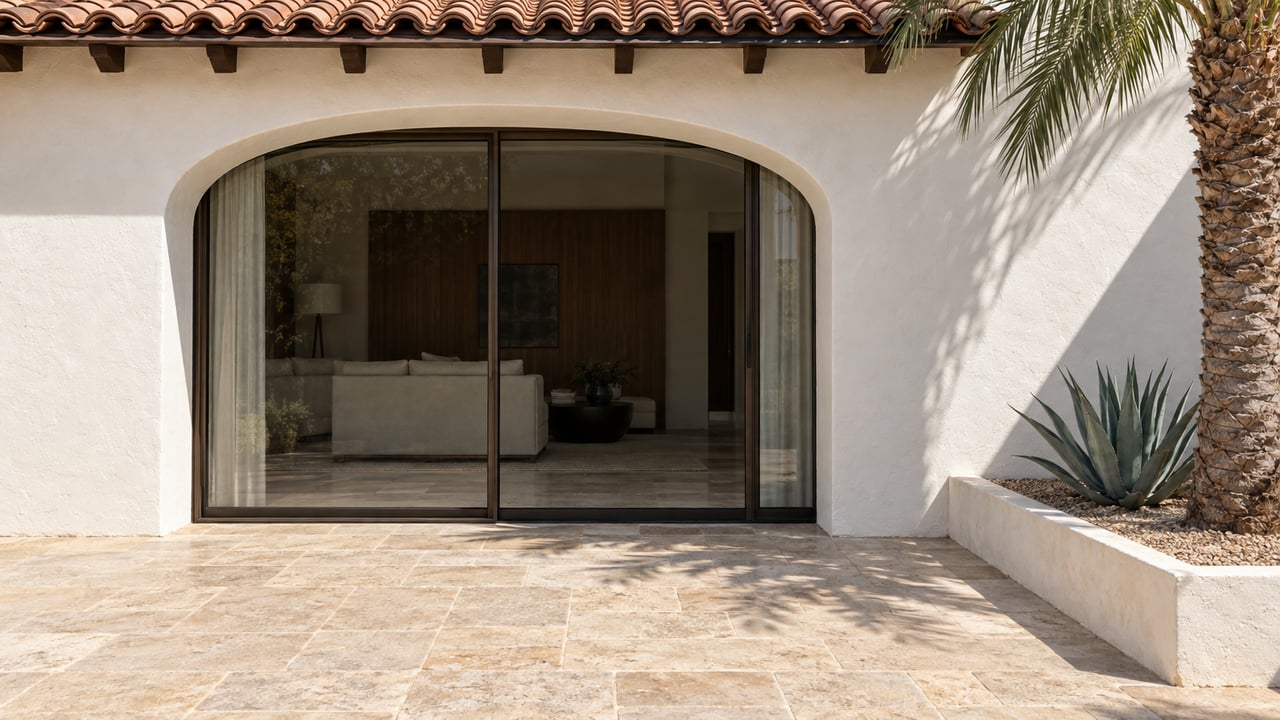
In Indio, the Vacation Rental Permit Belongs to the Seller, Not the House
October 1, 2026
October 1, 2026
If a listing photo shows Coachella and Stagecoach circled on the calendar alongside a strong rental history, here's the question worth asking before writing an offer: does that income belong to the house, or to the person who currently signs the permit?
In Indio, it belongs to the person. The city's short-term rental permit, issued under Ordinance 1766 and folded into Chapter 37 of the Municipal Code, is tied to the individual owner and the business license registered in their name. It does not ride along with the deed. A buyer who closes on a home that is currently operating as a licensed vacation rental starts the application from the same blank page as anyone else in the valley, and the seller's approval history counts for nothing in that process.
That distinction matters more in Indio than almost anywhere else in the Coachella Valley, because Indio is the city where the permit is genuinely obtainable. Rancho Mirage issues none. La Quinta has closed most of its residential map to new short-term rental applications outside a short list of exempt resort and HOA communities, homeshare arrangements, and large lots of 25,000 square feet or more, a carve-out that has only been in effect since January 2024. Indian Wells allows new permits only with a 29-night minimum stay, which functions less like a vacation rental and more like a seasonal lease. Indio, by contrast, has no neighborhood density cap and no minimum-night rule. That openness is exactly why festival season demand concentrates there, and exactly why the reapplication requirement catches so many buyers by surprise. The city that says yes is not the same as the city that says yes automatically.
Indio's short-term rental permit and business license are issued as a single combined document that renews annually. The fee has held at $1,633 a year since February 15, 2022, on top of standard business license charges. Applicants also need a named local contact who can be reached around the clock and a minimum of one million dollars in liability insurance, both required at the time of application rather than after approval.
Occupancy is capped at 20 overnight guests regardless of how many bedrooms the home has. That flat cap replaced an earlier system where owners could request higher limits by demonstrating the home's configuration could support more people. The current rule is simpler to enforce and harder to argue with, which is likely the point.
One carve-out applies no matter who owns the home or how they use it. Accessory dwelling units and junior accessory dwelling units can never operate as short-term rentals in Indio. That restriction exists independent of the primary permit, so a property with an ADU marketed as extra rental capacity is marketing something the city will not license.
The permit's non-transferability is the detail that changes a purchase decision. Indio's short-term rental permits, like La Quinta's, belong to the owner rather than the property and do not transfer with a sale. A new owner has to apply fresh, pay the fee again, secure their own local contact and insurance, and clear the same review the seller once cleared. None of the seller's approval history, tenure, or track record carries forward.
For a buyer evaluating a home specifically for its festival-season income, that means the number on the listing sheet describes what the seller was able to do with the property, not what the buyer is guaranteed to inherit. The house is the same. The permit is not.
HOA rules add a second layer that operates independently of the city. A city permit does not override a homeowners association's CC&Rs, and most Coachella Valley HOAs prohibit stays under 30 days regardless of what the city allows. Indian Palms Country Club and Resort is one of the better-known Indio communities where vacation rentals are permitted, but only in select sub-associations within the larger development. A buyer touring a home there still has to confirm which sub-HOA governs that specific address before assuming the city's openness applies.
Investors researching the city consistently flag its enforcement posture before its tax rate, and the direction of travel across 2025 and 2026 has been toward tighter rules rather than looser ones. In March 2026, Indio's City Council took up proposed changes ahead of that spring's Coachella and Stagecoach weekends, including a steep increase in fines for party-house violations and a strike system that can lead to permit revocation after repeated noise complaints. Under the proposal, a first noise offense could run as high as $1,000 and repeat violations up to $5,000, with enforcement modeled on the same minute-by-minute penalty structure the city already applies to festival promoter Goldenvoice when performances run past curfew.
Mayor Elaine Holmes framed the changes as a response to enforcement gaps rather than a reversal of the city's rental-friendly stance.
"We need something that has teeth," she said.
City Attorney Steven Pacifico described the reasoning behind the higher fee structure in similar terms, saying the increases were necessary to create a real disincentive for repeat offenders rather than a cost some operators would simply absorb.
For a buyer, the practical read is that Indio's openness on paper coexists with an active complaint hotline and a council that has shown it will raise penalties when problems concentrate around specific festival weekends. A permit history full of noise strikes doesn't transfer to a new owner, but the property's reputation with neighbors and code enforcement often does.
| City | Current posture on new permits |
|---|---|
| Indio | Open, no density cap, no minimum stay |
| Rancho Mirage | Bans short-term rentals outright |
| La Quinta | Closed to most new permits outside exempt zones, homeshare, and 25,000+ sq ft lots |
| Indian Wells | Allows new permits only with a 29-night minimum stay |
| Palm Desert | Allowed only in specific zones and qualifying HOAs |
| Cathedral City | Allowed only through homeshare or qualifying HOA properties in Resort Residential zoning |
| Palm Springs | Allowed with a permit, capped at 26 rental contracts per year as of January 2026, subject to a 20 percent neighborhood density cap |
The comparison explains why Indio absorbs so much of the valley's festival-driven rental demand. It also means a buyer weighing an Indio purchase against a similarly priced home in Palm Desert or Cathedral City is comparing two different regulatory environments, not just two floor plans.
Indio's median sale price stood at $540,000 as of July 2026, down slightly from a year earlier, with homes taking an average of about 64 days to sell and 237 homes closing that month. Inventory has been building, with 332 active listings that same month, and homes were selling at roughly 97.9 percent of asking price, conditions that generally favor buyers with room to negotiate rather than compete.
Most of what's selling is standard owner-occupied housing. Single-family homes made up 82 percent of tracked closings over the trailing six months through August 2026, with a median sale price of $520,000 and the middle half of sales landing between $405,000 and $609,000. That spread matters more than the single median figure, because it shows how much the number moves depending on which part of the city a buyer is shopping in. A buyer specifically targeting rental income sits inside a smaller slice of that market, one where the regulatory picture matters as much as the price per square foot.
Does a home's current rental income transfer with the sale? No. The income reflects what the seller was licensed and able to do. A new owner reapplies for the permit independently and has no guarantee of matching that history.
If the HOA currently allows short-term rentals, will it always? Not necessarily. HOA rules can change through board votes or amended CC&Rs, and a city permit never overrides HOA restrictions regardless of what's currently written into a specific community's governing documents.
Does an ADU on the property add rental capacity? No. Indio's ordinance prohibits ADU and JADU use as short-term rentals under any circumstances, so that square footage doesn't factor into a permit application.
Is the transient occupancy tax the biggest cost to plan around? It's a real cost, roughly 13 percent plus a 1 percent tourism assessment, but investors who've operated in Indio point to enforcement risk, not the tax rate, as the bigger variable to underwrite.
If you're weighing a purchase in Indio with festival-season income in mind, the permit history on paper is a starting point, not a promise. Mike Read and the team at Read Group Real Estate can walk through what a specific address's permit status, HOA rules, and compliance history actually mean before you write an offer, so the number on the listing sheet and the number you can legally earn are the same one.
Stay up to date on the latest real estate trends.

Whether you are new to the desert market, contemplating selling your home, or are a savvy investor, The Read Group has the know-how, resources, and determination to get the job done successfully for you, Work with Read Group Real Estate now!