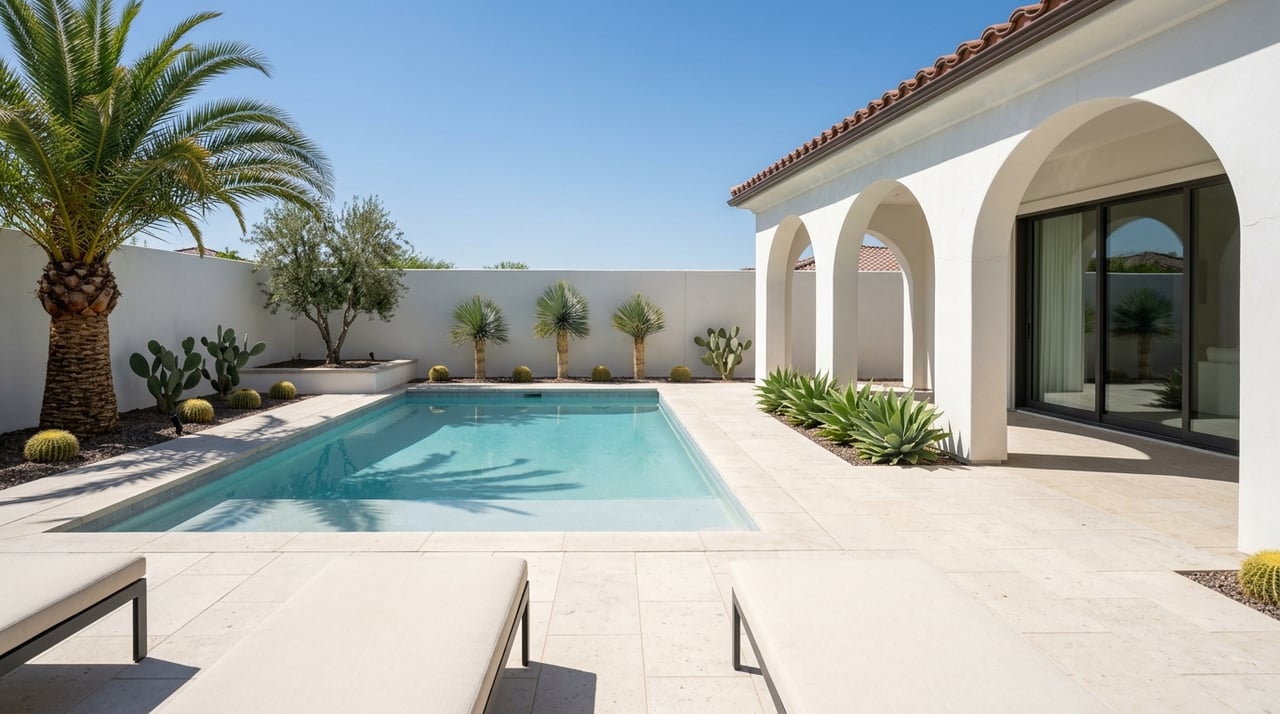
How Indio Short-Term Rental Buying Works Step by Step
May 21, 2026
May 21, 2026
Buying a short-term rental in Indio can look simple on the surface. You find a home, picture festival-season bookings, and start running the numbers. But in this market, a property can look promising and still miss the mark because of city rules, HOA limits, or loan structure. This guide walks you through the steps that matter most so you can buy with more clarity and fewer surprises. Let’s dive in.
Indio draws nearly 1.4 million visitors each year and is known for major events at the Empire Polo Club, including Coachella and Stagecoach. The city also hosts other seasonal draws like the Southwest Arts Festival, the Riverside County Fair & National Date Festival, and the Tamale Festival.
That matters because short-term rental demand in Indio is closely tied to festival traffic and seasonal desert travel. In other words, this is not a market where you should assume steady year-round demand at the same pace every month. Your purchase decision should be based on realistic planning, not just peak-season excitement.
Before you think about furnishings, pricing, or guest photos, confirm that the property can actually be used as a short-term rental. In Indio, that means checking both city rules and any HOA restrictions tied to the home.
The city requires a short-term rental permit and a business license before an owner can advertise or operate a short-term rental. Indio issues those together as one combined document, and the city lists an annual STR permit fee of $1,633, plus the business-license fee and tax.
Just as important, Indio states that you cannot advertise or rent the property without an active permit. Filing an application does not give you the right to start renting early.
This is one of the biggest deal-breakers for buyers. Under California law, a common interest development can adopt and enforce rules that prohibit short-term rentals of 30 days or less.
That means a home can meet city rules and still be unusable for your rental plan if the HOA bars that use. Before making an offer, review the CC&Rs and any current HOA rental restrictions carefully.
You should also confirm whether the property appears in the city’s active permit registry and ask about permit history. Indio says permits are not transferable to a new owner, entity, parcel, or property owner. If a permit expires, the owner must reapply as if the property were a new short-term rental.
It also helps to verify the legal bedroom count, parking setup, and whether the home’s layout fits city occupancy and gathering rules. A property that looks great online may be less practical once you match it against the actual operating standards.
A short-term rental purchase only works if the math works after local costs and rules are built in. In Indio, your underwriting should be conservative from the start.
Residential short-term rentals are subject to a 13% transient occupancy tax on gross rent, plus a 1% Greater Palm Springs TBID assessment on gross rental revenue for stays of 27 days or less. The city says gross rent includes more than the nightly rate. It also includes cleaning fees, cancellation fees, late or early check-out fees, pet fees, pool-heating fees, and similar charges.
That means you should not treat extra guest fees as harmless add-ons when modeling income. They affect your tax and assessment calculations, so your net income may be lower than a quick spreadsheet suggests.
When you evaluate a property, account for:
If the home depends heavily on festival-season bookings to perform, be especially careful with your assumptions. Indio can be a strong event-driven market, but event-driven markets can also be uneven.
Financing is another area where buyers can get tripped up. If you are buying with a loan, ask your lender early how the property will be classified.
Fannie Mae’s second-home rules require that the borrower occupy the property for some portion of the year, that the property be a one-unit dwelling suitable for year-round use, and that the borrower maintain exclusive control over it. Those rules also prohibit use of the property as rental property or a timeshare, and rental income from a second home generally cannot be used to qualify.
That is why many properties intended primarily for short-term rental income may fit more naturally under investment-property underwriting than second-home financing. This is especially important if you plan to use professional management or rely on rental income in your buying strategy.
Once you find a property that looks promising, your offer should protect you. The goal is not just to win the home. It is to make sure the home fits your intended use before escrow closes.
A practical approach is to make your offer contingent on:
That last point matters because Indio’s permit process includes signed consent to building, fire, and health-and-safety inspection, along with proof of general liability insurance of at least $1,000,000 or equivalent platform coverage.
If you buy the property, the next step is not just getting it furnished. It is setting it up to operate within Indio’s rules.
Indio’s operational standards are detailed, and they affect how many guests you can host, how you market the home, and how quickly problems need to be handled.
The city caps overnight occupancy at two people per bedroom plus four. Renters must be at least 21 years old.
Quiet hours run from 9 p.m. Sunday through Thursday and 10 p.m. Friday and Saturday. Outside music or noisy outdoor activity cannot be audible during those restricted hours.
Large gatherings can trigger a special-event permit, with thresholds that vary depending on lot size. That means a home with a large yard or pool area is not automatically a fit for high-volume entertaining.
Before you buy, think beyond the photos. Ask whether the parking, lot size, and layout actually support the way you plan to operate the property.
Indio requires the owner or local contact to be available 24 hours a day, seven days a week. The required response window is 15 minutes by phone or text and 45 minutes in person when complaints arise.
For out-of-area buyers, this is a major planning point. If you will not be local, you need a reliable system in place from day one.
Your listing is not just a marketing piece. It also has to meet city standards. Ads must include the permit number, maximum occupancy, permitted bedrooms, maximum vehicles, and a front photo of the property.
Indio also requires owners to keep rental contracts and related compliance records for three years. And even if you use a professional host, the city says the owner remains liable.
A practical purchase and launch sequence can help you avoid expensive mistakes. In Indio, the order matters.
Double-check HOA documents, the city’s active-permit registry, permit history, and the home’s legal bedroom count. This should happen before you get too far into the process, not after you own the property.
Update your numbers with taxes, assessments, furnishing costs, insurance, and operating expenses. Be careful not to overestimate what peak-season demand means for annual income.
Work with your lender early on second-home versus investment-property classification. This step is too important to leave until the last minute.
Use contingencies tied to HOA review, permitability, inspection results, and insurability. It is much easier to address these issues before closing than after.
After closing, complete the permit setup, finish any required inspection, secure the required insurance, and prepare guest materials around occupancy, parking, and noise rules.
Because major Indio demand periods are tied to festivals and seasonal traffic, plan ahead for access, turnover timing, and guest communication during those periods. A property can be well located and still require careful logistics management when the city is at its busiest.
Most short-term rental purchase problems in Indio trace back to three issues. Buyers either assume the property is allowed, assume the financing will be straightforward, or assume the income will cover more than it really does.
The safest path is to verify municipal compliance, HOA restrictions, and lender classification before escrow closes. If those three items check out, you will be in a much stronger position to decide whether the property truly fits your goals.
In a market like Indio, thoughtful buying beats rushed buying every time. If you want help evaluating homes, reviewing practical fit, and navigating the Coachella Valley market with a local team, connect with Mike Read.
Stay up to date on the latest real estate trends.


Whether you are new to the desert market, contemplating selling your home, or are a savvy investor, The Read Group has the know-how, resources, and determination to get the job done successfully for you, Work with Read Group Real Estate now!